

One of the Top 5 Cancers
in Korean Men: Prostate Cancer
Prostate cancer ranks among the top 5 cancers in Korean men and is the #1 cancer diagnosed in American men.
With early diagnosis through HIGHST Urology, a complete cure can be expected when treated at an early stage.
Definition
Malignant Tumor of the Prostate:
Prostate Cancer
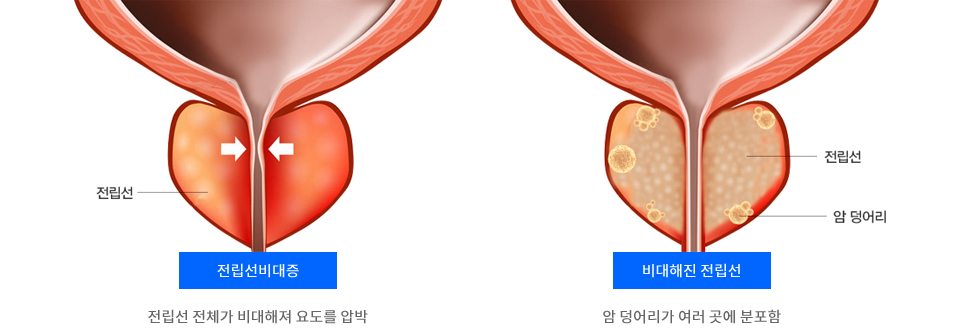
Prostate cancer refers to a malignant tumor that develops in the prostate, an organ found only in men. It is the 5th most common cancer in Korean men, following stomach, lung, colon, and liver cancers. Currently, approximately 3.4 out of every 100 Korean men aged 55 and older have prostate cancer. In the United States, prostate cancer is the most commonly diagnosed cancer in men, the second leading cause of cancer death, and in men aged 75 and older, it is the number one cause of death.
Causes
Causes of Prostate Cancer
Approximately 9% of cases are known to have a family history. Several studies have also suggested associations with high-fat diets and high concentrations of male hormones, but the exact cause of prostate cancer has not yet been clearly identified.

Testicular Aging

Westernized Diet

Genetic Factors
Symptoms
Symptoms of Prostate Cancer
In its early stages, there are virtually no symptoms and early diagnosis is difficult — approximately two-thirds of cases are diagnosed when the cancer has already significantly progressed.
At this stage, the cancer cells may have already metastasized to the spine or bones, causing pain in those areas. When the tumor grows large, symptoms similar to BPH (benign prostatic hyperplasia) may appear, such as difficulty urinating.
Most symptoms caused by prostate cancer are similar to those of BPH, but with the recent widespread use of the PSA (Prostate-Specific Antigen) test, early diagnosis of prostate cancer has become possible.
Diagnosis
Diagnosis of Prostate Cancer
01
Digital Rectal Examination (DRE)
A finger is inserted into the rectum to directly palpate the prostate. Hard, irregular nodules on an enlarged prostate may be detected through this examination.
02
Prostate-Specific Antigen (PSA)
Generally known as the "prostate cancer marker," PSA levels can be measured through a blood test. Since PSA levels can also be elevated in cases of BPH or prostatitis, differential diagnosis through additional tests is necessary.
03
Transrectal Ultrasound (TRUS)
An ultrasound probe is inserted through the rectum to visualize the prostate. This allows easy imaging confirmation of the current state of the prostate.
04
Prostate Biopsy
When prostate cancer is suspected based on the above examinations, a confirmatory biopsy is performed. Using transrectal ultrasound guidance, needle biopsies are taken from multiple areas of the prostate, including the suspected cancerous regions.
05
MRI and Bone Scan
These are performed to determine the stage of cancer by checking for invasion of surrounding tissues, lymph node metastasis, and bone metastasis.
Treatment
Treatment of Prostate Cancer
01
Radical Prostatectomy
For cancer confined within the prostate, a radical prostatectomy — the surgical removal of the entire prostate — is performed.
02
Radiation Therapy
Radiation therapy may be administered when surgery is not possible or when the patient refuses surgical intervention.
03
Hormone Therapy
Hormone therapy involves eliminating the male hormones that are related to the growth of prostate cancer cells. It is used for advanced cancer that has spread to surrounding tissues or other organs. Hormone therapy is also administered when a patient is eligible for surgery but cannot undergo the procedure due to other co-existing medical conditions.
Prevention
Prevention of Prostate Cancer
The most important thing is early detection.
Research has shown that vegetarian or low-fat diets may reduce the risk of prostate cancer. Based on current studies, low-fat, high-fiber diets and the intake of selenium and vitamin E are known to have preventive effects against prostate cancer.
However, above all, early detection is the most critical factor. Men aged 50 and older with a family history of prostate cancer, or those with abnormal findings on prostate cancer screening (digital rectal examination, PSA test), should consult a urologist. Early detection makes it possible to achieve a complete cure.